Ongoing project. Work began in 2024, and the series was exhibited at Praxis Fiber Workshop in 2025.
Secret Family uses the discovery of a family secret as a way to explore the “slow violence” (a term coined by scholar Rob Nixon) of generational trauma. The secret: following my grandmother Betty’s death, my father discovered a stack of letters in her house in Ohio from a man named Jack Merritt, who lived in West Virginia. Among these were several letters from my great-grandmother—writing on behalf of Betty, then a child—to Jack. After reading the letters, my father and I concluded that Jack was Betty’s biological father. I had never heard of him before.
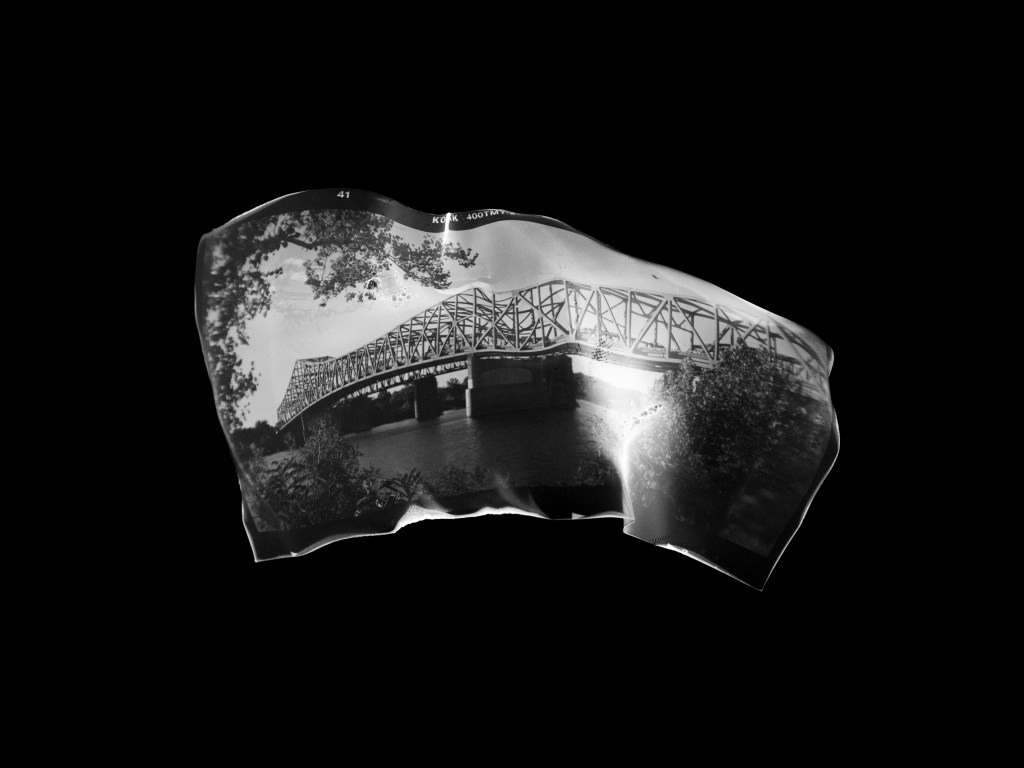
Traveling to West Virginia, I used a panoramic Holga camera to create evocative black and white images depicting sites where Betty and Jack’s lives intersected. The larger film surface area was crucial because after developing the rolls, I engaged in an experimental process of attempting to strategically burn parts of the negatives using an open flame. The gnarled negatives were then rephotographed atop a light table.
In her research on family secrets, sociologist Ashley Barnwell writes that they, “operate as a form of social censorship that can play out slowly over lifetimes, affecting both specific families and stoking wider social ideas and values about what kinds of family lives and experiences are worthy or acceptable.” The act of burning the negatives enables me to visually manifest social censorship. By engaging with what was once confidential, I both counter and highlight the “slow violence” of social stigmas.
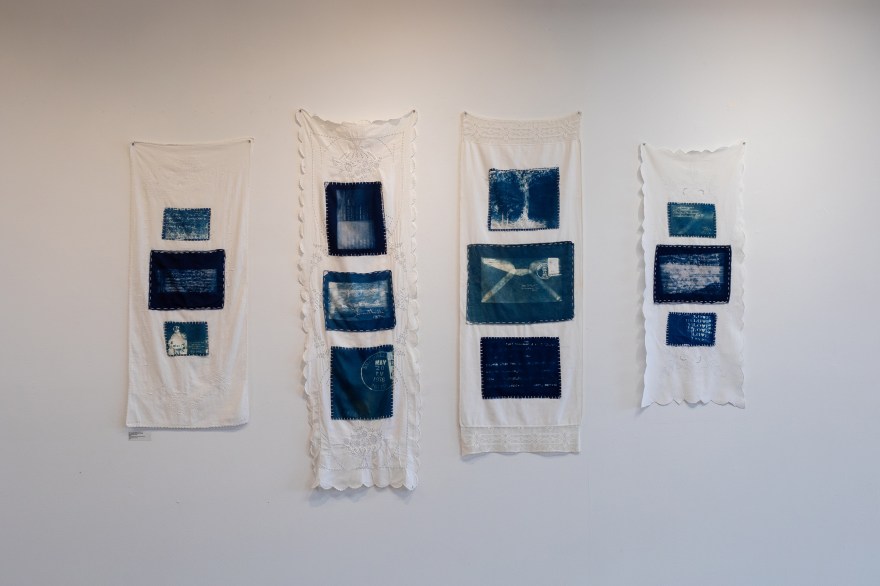
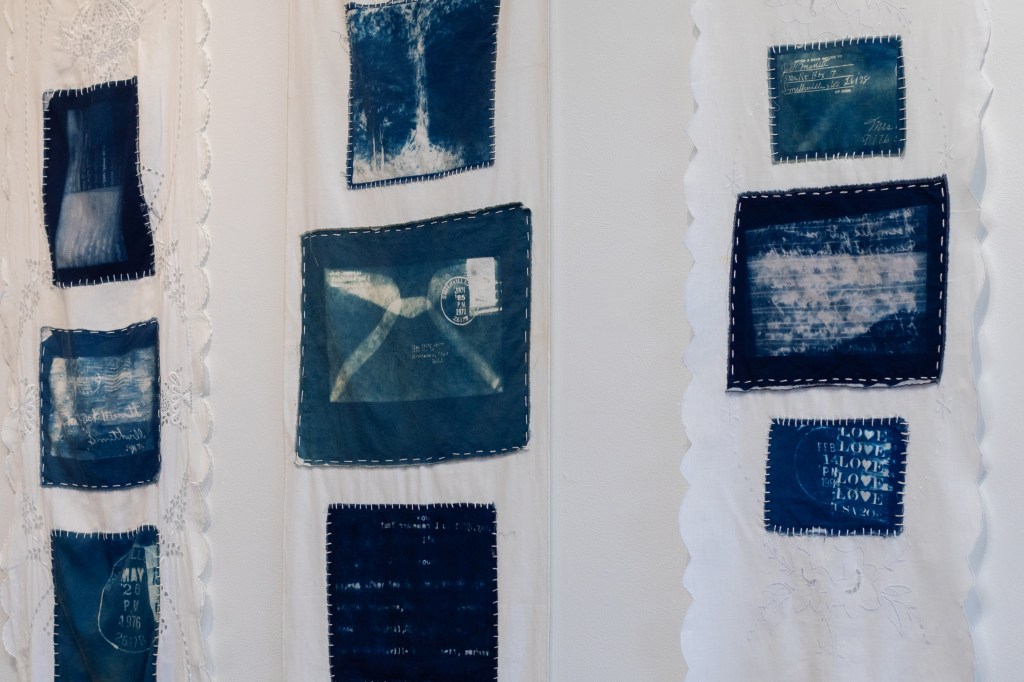
I also expanded my creative practice by incorporating organic materials into the work that I foraged in Ohio and West Virginia. I printed images of the letters themselves onto cotton sateen using cyanotype chemistry and toned the fabric with natural dye baths of buckeye, oak, and sumac. The inclusion of the cyanotypes, delicately stitched onto found textile table runners, imbues the work with an intimate sense of domesticity and encourages a consideration of what we obscure or choose to reveal in our lives.
Additionally, I experimented with phytography to craft a stop-motion Super 8 short film from dirt and plants such as moss, sweet pea, and yarrow, also gathered from ancestral sites. The phytography method, pioneered by artist Karel Doing, “uses the internal chemistry of plants for the creation of images on photographic emulsion.” I selected Super 8 film as my substrate due to the pivotal role it plays in many family histories, as it revolutionized the accessibility of filmmaking technology in the mid-20th century. This stop-motion piece serves as a means for me to interact with the land directly and meditate on cycles of life and death.
The Secret Family project is ongoing, and I am currently developing it to incorporate portraits of myself and my family members engaging with the letters and spending time at the sites from Betty and Jack’s lives. As I reflected on what I made in 2024, I realized that these aspects of the process were missing from the overall series, and it was important to include them moving forward.
Initial work for Secret Family was supported by the Urgent Art Fund administered by SPACES and supported by residents of Cuyahoga County and Assembly for the Arts through a public grant from Cuyahoga Arts & Culture.

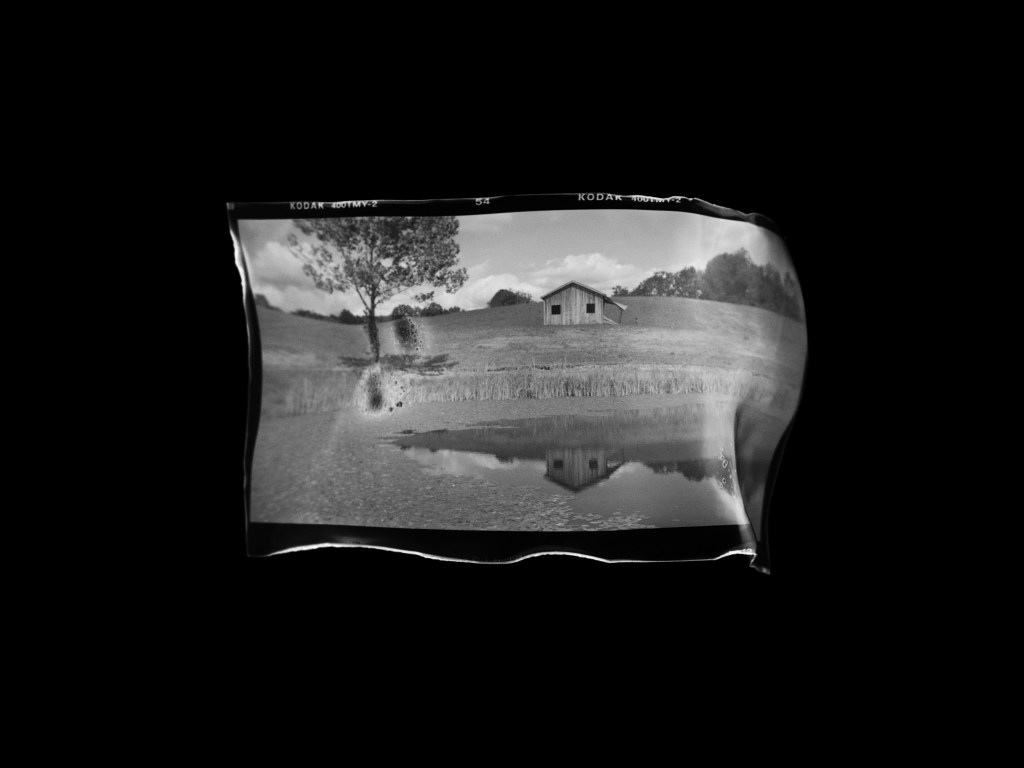

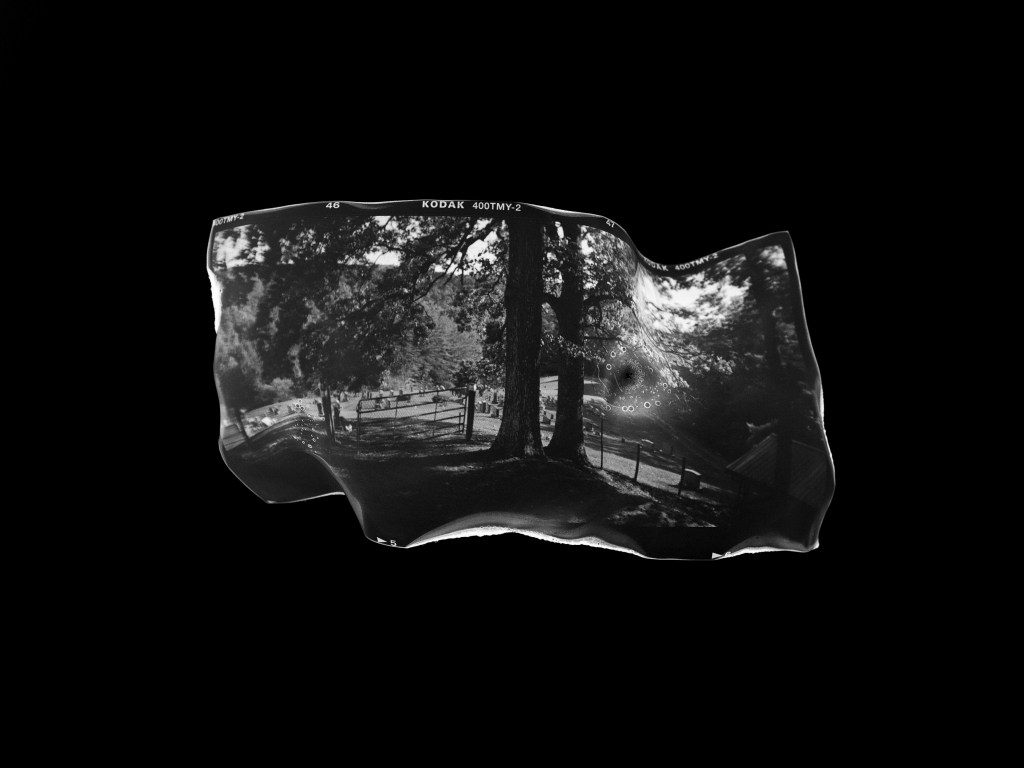
(Left to right) Secret Family 1, Secret Family 3, Secret Family 8, Secret Family 14. 2024. Inkjet prints on Moab Juniper Baryta Rag, 15 x 18 inches.
plenty heart aches no fault of yours. 2024. Stop-motion short of phytographs on Super 8 film.
 Mary Defer Photography